| |

Thu Jun 15 2006
Categorized under Techno-logical

Thinglink is a new service that allows you to give a unique product code to your handmade object or craft. It’s a simple idea, and even though it hasn’t lived long enough to make any real predictions, this service may find it’s niche with makers and crafters. Until now, tagging and logging photographs of projects was done with Flickr or Instructables. And, although Thinklink isn’t much different than these sites functionally, it has simplified the need to document a project down to one picture, a description, some tags, and (at the crux of it), a unique identifier code. All of these entries are contained within a searchable database that can be referred to by anybody. I will be interested to see if this catches on, because all of these things can also be done with Flickr - the only thing is is that Flickr is more oriented towards collections of pictures. It’s an interesting subtlety, and it may mean that people won’t really find a need for Thinglink. So check it out. See what you think. If you’ve got a thing, then make a Thinglink for it. If you think it works out, or if you think it fails dismally, leave a comment and let me know. I’m interested to see how Thinglink will work out.
Wed Jun 14 2006
Categorized under What were you thinking?
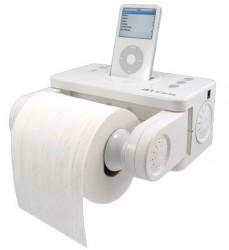
So, I understand that this iPod thing is really popular. You can listen to music. Anywhere. All fine and dandy… until somebody thought it was a good idea to listen to your music really anywhere. Does this company really think that they will sell enough of these to even come close to breaking even? Did you do any kind of user-testing before launching this product? I’m in awe. Really. Although, since I am a music elitist (your music sucks unless it’s the music I listen to), this toilet paper iPod dock does allow me to make a witty comment: Since your iPod is filled with crap, I present you with this device allowing you to listen to your crap music in the crapper. And with that, I will stop saying crap before this turns into an all-out crap-fest. Aw man… I think I’ve already failed crap-tastically. Crap.
Tue Jun 13 2006
Categorized under Geek Chic and Enough Already! and Do It Yourself

“Hello? Is BoingBoing there? Oh, hi! Could you link to my new NES Controller Cellphone Mod? That would be awesome. Yeah. And, if you could tell Make and Engadget to do the same? Cool! DIY:Happy will surely crash. Awesome. Thanks… okay, gotta go - one of the Contra dudes is on the other line. Bye.”
I awake this morning to find a cool Make:Blog post on a NES controller cellphone mod… and then I find another another… and another. Over the course of a single night, this has recieved more bloggosphere-ing than… well, something that gets lots of bloggosphere-ing. Maybe this is a good thing for the DIY community? Maybe I thought it was awesome the first five times I saw it? Maybe I’ll end my post with a question, having said basically nothing about what I’m posting about, and just adding to the general clutter of the interweb?
Mon Jun 12 2006
Categorized under Geek Chic and Do It Yourself
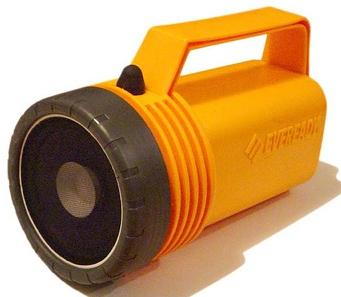
I’m always up for a good case-mod, and this project combines two completely different things very well. Flickr member aninteger has a photostream on a project that takes a large flashlight and converts it into a mini-mono-boombox. The round speaker that is used fits perfectly into the light-bulb-reflector compartment, which is the main thing that allows these two elements to be so flawlessly intertwined. The battery compartment has ample space (ha-ha, “amp”le?) for the rest of the components - mostly scrounged from some old computer speakers. This is also a great project in my book because there is no circuit board making - and, if you are really lazy, no soldering as well. aninteger uses a wireless remote to control the internal iPod from the outside. This could easily be done without a remote control, if you didn’t mind opening up the battery compartment every time you wanted to change something. I could also see some very simple additional features added to the outside, like volume control, or maybe even a screen. This all depends on your music player of choice. Whatever you decide to do, though, this flashlight boombox will turn some heads.
Fri Jun 2 2006
Categorized under I want to build this and Do It Yourself

In some instance previous to this current instance, I have seen this same record bowl project, but have since forgotten about it. Vinyl (you know, the stuff that records are made of) is very easily heated-up and molded into other shapes. According to ThriftDeluxe - this happens at about 100 degrees Celsius, or 212 degrees Fahrenheit for all of us Americans. This temperature range is very easily achieved in one’s own home oven. ThriftDelux goes over how to form your record into a bowl - which is a cool way to display your love (or hate?) of the bygone vinyl-music era. I’d be interested to see other projects involving the re-forming of vynil records… if you are an artist this could be a thought-provoking way to express that socio-contra-econo-infra-cultural-micro-audiologyic-ish-ness that you have been striving to express. Or, if you’re like me, you could just make stuff out of records. I’d love to see any vinyl projects other people have done… leave your link in a comment!
In an semi-unrelated note, ThriftDelux’s images did not show up in my FireFox browser. It turns out they are using static Flash images for their tutorial steps. Why they would do this? I’m not sure. Maybe to prevent people from copying their wonderful diagrams (*laughs*). But for a web-design company, not such a great idea. Also not such a great use of Frames. Frames are SO 1990s. WTF.
Thu Jun 1 2006
Categorized under Do It Yourself and Techno-logical
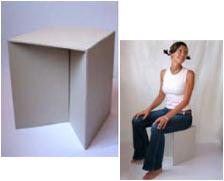
Similar to the FedEx Furniture Guy, Designboom has a great roundup of some designers that were challenged to make furniture out of cardboard. There are a couple of pages of a wide array of entries that are very intriguing to look through. They range from very simple to fairly complex: some of them sporting origami roots, others focusing on portability. Cardboard is a great medium, in part, because it is so cheap and ubiquitous. Lots of these designs can be readily duplicated from the pictures presented on the site. If you are looking for a light and easy-to-carry go-chair for sporting events or picnicks, take a look. If you are going for the I’m-so-modern-I-use-societal-byproduct-as-furniture look, then this is also the place for you. If you were looking for rabbits… well, you’re not so much in luck. Sorry.
Wed May 31 2006
Categorized under I want to build this and Do It Yourself

‘Hokay, DIYpeoples, since I couldn’t really find anything new AND interesting on the projects front, I will have to settle for something that is not so much new, but interesting none-the-less. I need a new project like I need another hole in my head… but if I did have the time/money/concentration to start another project, I would make my own tshirts. I wear them a lot. Like every day.
Once I do have my own process worked out, I will post it. But until then, here are some great resources to get you started.
No Media Kings has an in-depth tutorial on silk-screening in general (for tshirts or posters or whatever). They go over a two-color example.
Angry Chicken has an innovative stencil process involving ironing freezer-paper. This is a way simpler process than the photo-emulsion method. Using cheap freezer paper is a great way to avoid buying expensive made-for-tshirt-making kits.
Craftgrrl has a great alternative process involving glue and an embroidery hoop. She also gives a great HowTo on using MS Paint to create an image - as opposed to using more complex image editing tools.
And finally: Stencil Revolution has many articles about stenciling in general. They do have two specific tshirt-printing HowTos, both involving an easy low-tech acetate stencil.
That’s it for now! If you have any other great TShirt making resources, please leave a comment!
Tue May 30 2006
Categorized under I want to build this and Do It Yourself and Friggin' Amazing

Wow, where have you been all my life, Vintage Projects? This site is dedicated to posting vintage articles that contain full plans for building the wildest things - for example, your own outboard jet-ski. They provide these articles for free in .pdf format, just waiting to be downloaded and oogled over. The projects are many and diverse, and range from wood projects like guitar building, crossbow construction and boat building, to more involved projects like go-cart building, tractor building, and snow blowers. There is even a whole section on building your own shop tools, like wood lathes, welders, and band-saws. Yes, building your own shop tools from scratch. Some of my favorite projects at first glance are: Lacquered Fish Head Ashtray, a Rear-Steered Bobsled, a Kid Powered Ferris Wheel, and a tractor made from a Model T. Vintage Projects states that they are a continuation of the now-defunct vintagefarmplans.com, and that they are pretty sure all of their articles fall outside of copywrite restrictions. Despite fuzzy copyright issues, this is a fantastic collection of detailed DIY plans, and definitely worth taking a look at.
Fri May 26 2006
Categorized under Do It Yourself
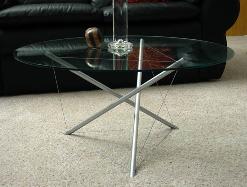
Maybe this really should be an artist spotlight on Kenneth Snelson, the artist who invented, and patented the Tensegrity. Tensegritys (Tensegrities?) are 3D sculptures that consist of bars and some sort of wire or string holding the bars together in such a way that seems to “defy physics”. Some really great photos can be found on Kenneth Snelson’s website - and even though these structures don’t actually defy physics (REALLY!?), the larger tensegrities almost look like they do. This Tensegrity, to the left, is a relatively simple one, and good ol’ yakko at virgina.edu has created this great DIY coffee table Tensegrity. Very elegant and modern, this would make a great addition to your living room… if you have an elegant and modern living room, that is (i.e. not for any of my rooms). This was reported on by Make:Blog, and I think yakko’s virgina.edu site has completely crashed because of it (I know sites can get Slashdotted, and even BoingBoinged - but can sites be Make’d? Made? Something like that). Ah, the interweb.
On a non-interweb related note, this also illustrates one of my favorite DIYer trick, which is actually an old woodworker’s trick. And it is simply this: Objects will always rest on three points of contact. This is why tables with four legs will sometimes rock, especially when they are on stone patios and the such. To avoid unstable tables, chairs, etc - only give them three legs, and they will always find a stable resting position no matter how level the ground is.
Thu May 25 2006
Categorized under Do It Yourself

I really enjoy perusing the Instructables archives. It gives me so many ideas, and also opens my eyes as to what is possible - both incredibly valuable features for any designer/DIYer. It is a shame, though, that sometimes the quality of posts to Instructables are, well, distinctly subferior (yes, that’s a made-up Matt word). And every so often, a post comes along that is of such a quality that makes all of those other posts worth trudging through. This is an awesome Instructable showing how to make a small, almost origami-type bird out of a soda can. Would I want to do this? Not really. I have some first hand experience with aluminum cans, and the cutting of my fingers thereof. But the instructions on how to build this lovely little bird are very well drawn, and the diagrams are very easy to follow. I think everyone who is even thinking of making their own DIY guide should take a look at this. And, on a completely separate note, IRN-BRU is the awesomest drink ever. Too bad its not sold Stateside.
Wed May 24 2006
Categorized under DFD Approved
I’d like to officially welcome two new blogs to my list, DIY:Happy and the ReadyMade Blog. Just so everybody knows, my lovely list on the right isn’t sponsored in any way - it’s just stuff I find interesting. So, to honor this event, I have selected one article from each of these blogs to comment on today. Think of it as a special double issue.

From the ReadyMade blog - an awesome shopping cart chair. Apparently they found this being sold on eBay for thousands of dollars. This makes me convinced that I should also add a new DFD.Blog category for things that are prohibitively unattainable, and therefore great DIY projects. There was also an appearance of this exact concept at the Maker’s Fair, which is where I first was introduced to the idea. If I had any room in my house for something like this, I would definitely make it. So, go forth, liberate a shopping cart… give it a good sterilization, and create comfy furniture out of it.
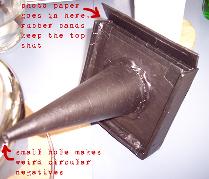
Ah, yes - DIY:Happy. From their great blog I bring you the Conehole camera. I just gotta mention something about this sounding like a Cornhole camera… and now you should imagine Butthead going “yeah yeah, Cornhole Camera… CoooooorrnHolio camera…” Okay, enough of that. Where this concept does seem a little overly complicated, it would be hilarious to take pictures with in public. DIY:Happy reiterates the fact that this camera makes “Wierd circular negatives”: this is not unique to the Cornhole Conehole camera, but actually shared by all pinhole cameras. Easy online calculators can help you determine how big a pinhole camera image will be once cast on a film surface - I would recommend this great site. Other than that, pinhole photography is awesome, and something I would like to try. I’m in the middle of a scanner photography project, so it will have to wait.
Tue May 23 2006
Categorized under Do It Yourself

If you have propensity for random DIY projects, then there is a good chance you have heard of American Science & Surplus. If you haven’t, then, this post is for you. I highly recommend looking through their site. They have a literal bonanza of random supplies. It is a little difficult to accurately describe exactly the kinds of things that A.S.&S. carries, but they describe themselves as “offering an eclectic range of products, many with a science or educational tilt to them, others simply handy or amusing”. Most of the items for sale are surplus lots of “scrap”, and henceforth, sold at very cheap prices. Just perusing through their extensive site gives me so many project ideas, it’s dangerous. So, if you have some time, and you have a project that needs a random part, I heartily suggest American Science & Surplus.
Mon May 22 2006
Categorized under Friggin' Amazing and Techno-logical
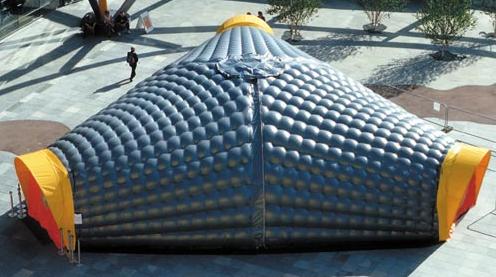
On this fine morning I bring to you a link to a UK company that makes sophisticated Bounce-Houses for grownups. Even though these impressively large inflatable structures no longer allow you to bounce around inside of them, they do provide a futuristic and uber-portable enclosed space. Mostly aimed at the portable presentation booth market (huh?), Inflate (that’s the company) mentions many uses for their adaptable spaces. The structure pictured here is called “Big M”, and where other structures have specific width and height measurements, the only measurement “Big M” has is: “Size: Big”. Well, thanks for that. Most of their other structures have some really neat vaguely-organic shapes that resemble molecules, igloos, turtle shells, and my small intestine. Another of my favorites is a product they seem to be featuring a lot, called Office In A Bucket, or OIAB for short:
Office in a bucket (OIAB) is a portable inflatable office / meeting room / chill out area housed in an easily transportable bucket.
Boy would I love to chill in a bucket. As it turns out, not only is this structure carried around in a bucket, but once inflated and inside, the interior makes it feel as if you were inside an even bigger bucket.
This post has been brought to you by the creatively named Inflate company, and dry sarcasm.
Fri May 19 2006
Categorized under What were you thinking?

I don’t know if I should begin with some sort of reference to the movie “The Da Vinci Code” (which premieres today), and the fact that the movie is probably the only reason this obscure Japanese ’scientist’ is getting any press. Or, maybe, I should begin with something mentioning how much I like to read translated websites, just because they are hilarious. Well, since I have clearly already begun, I will move on: this ’scientist’ says he has re-created the voices of Leonardo DaVinci and Mona Lisa, based on images of their faces. Really? That’s Awesome! [Now read those last two sentences, except in a sarcastic tone]. He also, as made apparent by the picture at left, has not-to-shabby photoshopping skillz.
Is it the part where I can quote translated webpages yet? Okay, good:
Renaissance era [da] [vuinchi] and the masterpiece “[mona] live [riza]” which. It could be wrapped in the veil of secret, voice of “2 people”, Today finally by power of science restoration! It is main point attention in the voice and of moving oral cause without of having the fact that everyone hears.
It goes on to say…
From the portrait picture of [da] [vuinchi] and [mona] [riza] the utterance organ on the computer simulation by the fact that it does, It succeeds in the synthesis of voice. This project was managed, the explanation by the Suzuki pine beauty person of the Japanese acoustic laboratory The mix, the details are introduced.
Well, since that wasn’t clear enough, the fine people commenting on the Slashdot article are currently engaged in a long argument about how well this technology works. Even without getting the sound clips to work, I can tell you the answer is “Not very well”. The Physorg article also mentions that this Japanese ’scientist’ is also the guy who brought us “Bowlingual”, a translation device for dogs. And, if that isn’t enough proof for you, I think there is a very fine recursive proof happening RIGHT IN FRONT OF YOUR EYES. If we don’t even have an automated translation tool good enough to translate text intelligibly (Mona Riza?), then why do you think a computer could analyze a 2D painting of somebody’s face and accurately extrapolate their speech? The answer, again, is “Not very well”. Or something.
Thu May 18 2006
Categorized under I want to build this and Do It Yourself

Boatbuilding has always been something that I have admired. Too often, though, it is incredibly complex - and not to mention, incredibly expensive. Well, leave it to the internet to prove me wrong again. This guy, Hannu, has an absolutely incredible website dedicated to building small, simple boats out of one or two sheets of plywood. And boy does he know what he’s doing: and unlike other people, I would feel completely comfortable making and using these boats. Come on! One sheet of plywood! And even though Hannu’s site looks like an early 90’s flashback, his website has extensive instructions that are well laid out - covering individual boat designs (I count fourteen), general materials, and various process. He also has some nice discussions concerning buoyancy, moisture, leak-fixing, surface treatment, “woodbending in the bedroom” [insert lewd joke here], stability… etc etc so on and so forth. For each of these boat designs, Hannu has also included a bunch of great diagrams and all the instruction you would ever need. So what are you waiting for! Make that dingy you’ve always wanted! You could make a lewd joke there as well! Personally, I’m going to make the boat that looks like an admiral’s hat turned upside-down.
Wed May 17 2006
Categorized under Friggin' Amazing and SpotLight
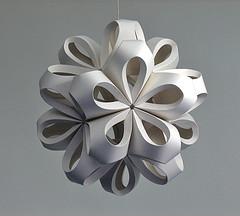
Apparently I’m all about artists this week. This is a Flickr Pool created by Richard Sweeney that details his incredibly detailed paper work. He creates these amazing geometric figures by using scoring, folding, and an incredible amount of scrutinized attention to detail. I would also assume that the paper is cut into certain shapes to begin with, but the folding of these shapes hides the edges quite well, so it’s hard to tell. These incredible paper creations bear a strong resemblance to Diatoms, which are unicellular organisms that have complex geometric exoskeletons [check out a Google image search to see what I mean]. I would absolutely love to see a how-to on making one of these, and Mr. Sweeney says he may have some tutorials up soon. But in the mean time, go look at his photos… and have your origami hopes and dreams shot all to hell.
Tue May 16 2006
Categorized under I want to build this and Friggin' Amazing and SpotLight
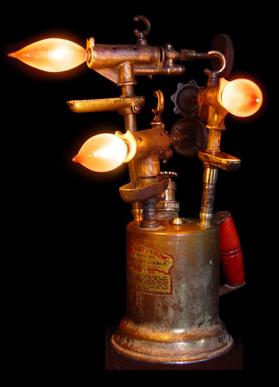
Now here is something that I would not mind spending my time doing at all. Andy makes these slightly odd throwback light sources out of “junk”, even though most of it looks like it came from an antique shop. Any way I look at it, if it’s garage-sailing, antique shopping, or just good ol’ dumpster diving, this looks like fun. I highly recommend looking through his site at his awesome creations - and if you’re in the Philadelphia area, I’d definitely try to stop on by. From my perspective, these art pieces combine two of my favorite elements: objects that visually remind you of another age, and light. Even though I like to explore the shadows and patterns cast by a light source, and the focus of these pieces is the light source itself, they are still very inspiring to me (did you catch that? I can artist-mumbo-jumbo with the best of them). I totally see myself doing this in retirement as a two step process: procurement of junk, and assemblage of junk. Very nice, Mr. Andy Schulman.
Mon May 15 2006
Categorized under Friggin' Amazing
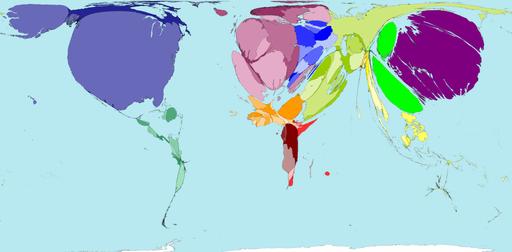
… according to known statistical factors, that is. This site has a variety of maps that are incredibly interesting to look through. They’ve taken each country, and adjusted it’s size according to factors like population, import and export of various materials and services, housing, disease, resources, and lots of other random quantifiable useless-fact-ness. The map pictured here is “Import of Tobacco and Alcohol Products”, which isn’t terribly surprising. Come on, America - we got to get a move on before some other country out-drinks and out-smokes us. When I originally saw these maps I immediately wondered what kind of software they use to inflate/deflate countries. I’ve seen maps like this before, but they have all used a scaled version of the countries, not a squished version of them. Something else that would be neat would be to get a bunch of the series maps, like population over time, and animate them together. It would be one big blob of countries squishing back and forth. Anyway, take a look. Great visualization of data.
Thu May 11 2006
Categorized under What were you thinking?
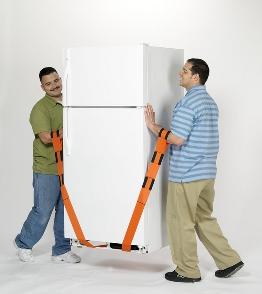
Doesn’t this look painful? I can’t help but have little engineering diagrams run thorough my head showing stress points on the middle of a thin bridge spanning two points with a huge weight in the middle. Like a refrigerator. Except replace “thin bridge” with “Your Forearm”, and that’s what this is. Apparently Industrial Equipment News awarded the Forearm Forklift “best new product of 1999″. So, Forearm Forklift, where have you been for the past seven years? Trying to convince people that your product isn’t completely painful to use, would be my guess. Would I use this? Maybe, just to satisfy my curiosity. There may be a chance that this is as incredible as they claim: however, 96.7% of selling a product is marketing… and it’s hard to make people run out and tether refrigerators to their forearms. Okay, Forearm Forklift, I’ll stop ragging on you.
Wed May 10 2006
Categorized under Friggin' Amazing and Techno-logical
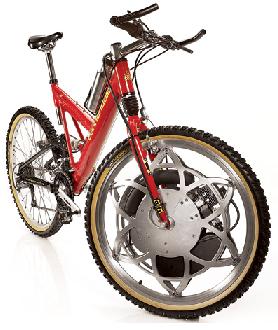
I’ve seen my fair share of add-on bike contraptions involving a small gas/electric motor, and some sort of setup connecting it to a wheel. My friend made one out of a lawnmower engine that was incredibly heavy, and literally sat on the back wheel, turning it by friction. Super loud, but effective. This device is just a tad more elegant. These guys have fit a 2 stroke, 1.1 horsepower combustion engine into the area of a normal bike wheel. When I first saw this, I thought it might work with some sort of fly-wheel centrifugal force propulsion - which is not how it works. The engine turns around a fixed axle. And, because of the quick-release-ness of a bikes front wheel, “The Wheel” (clever name… really…) looks like it will be very easy to install (and very easy to steal?). In addition to the new front wheel, there is a throttle cord that goes up to your handlebars, and a water-bottle-shaped gas tank that goes in that watter bottle holder. The website has a pretty cool video (Quicktime), with some good user testing interviews, and horrible music. They are claiming 200mpg to 240mpg, and at $400, may be a good alternative to that thousands-of-dollars Vespa that only gets 65ish mpg. PopSci points out some good, uh… points: the engine may require a driver’s licence in some states… and don’t drink from the water bottle. Thanks, PopSci.
:Pages:
|
|
|


 del.icio.us